Signs of a hidden leak
- Your water bill jumps and your habits haven't changed
- The water meter keeps moving with the water off
- A warm spot on a tile or concrete floor
- Stains, bubbling paint or a musty smell on a wall or ceiling
- A soggy patch of yard between the meter and the house
- The sound of running water when nothing is on
The cost of a slow leak
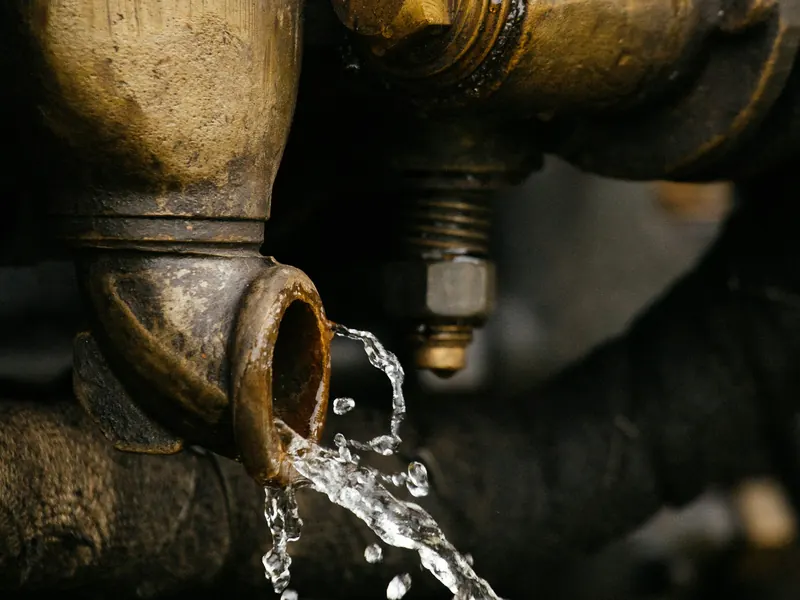
EPA WaterSense estimates the average household's leaks waste nearly 10,000 gallons of water a year. A faucet or pipe dripping once per second wastes more than 3,000 gallons a year on its own.
Leaks inside walls and under floors also soak framing and subfloor for weeks before a stain appears.
Finding the source
The plumber starts by shutting off sections of the plumbing to narrow down where the water goes. From there, pressure testing, acoustic listening gear or thermal imaging can pinpoint a leak behind drywall or under a slab.
Repairs range from replacing a fitting under a sink to rerouting a line around a slab leak or replacing a section of yard pipe. The plumber explains the repair and prices it before starting.
Common questions
What causes a slab leak?
Water pipe under a concrete slab can wear where it rubs against concrete or gravel, corrode over time or fail at a joint. Hot water lines are a common source, which is why a warm spot on the floor is a warning sign.
Will the plumber have to open my wall or floor?
Sometimes. Finding the leak first lets the plumber open the smallest area needed to reach the pipe. Ask about access and patching when you get the estimate.
Is a leak an emergency?
Active flooding is. Shut off your main water valve and call an emergency plumber. A slow leak, a high bill or a damp spot is the kind of job we book.